Ever wondered why a perfectly crisp cucumber can sometimes deliver an unexpected jolt of bitterness? Unraveling this culinary mystery reveals both the plant’s defense mechanisms and ingenious ways to reclaim its refreshing taste.
Cucurbitacins – The Molecular Source of Bitterness
The primary culprit behind a cucumber’s sharp, unpleasant flavor is a group of natural chemical compounds known as cucurbitacins. These terpenoids serve as the plant’s inherent defense mechanism, acting as a natural pesticide against pests and diseases. While their presence poses no health risk, even minute concentrations significantly diminish the cucumber’s palatability. Human taste receptors can detect cucurbitacins at concentrations as low as one part per million, making them remarkably potent bitter agents in natural foods.
Understanding cucurbitacin concentration
Cucurbitacins are not uniformly distributed throughout the cucumber. They tend to concentrate most densely in specific areas:
- The outer skin
- Both ends, particularly the stem end
- The tissue immediately beneath the skin
Cultivation and Genetic Influences on Cucumber Bitterness
The intensity of bitterness in cucumbers is intricately linked to both their growing conditions and the genetic makeup of individual varieties. Understanding these factors allows for proactive management of flavor.
Environmental stressors and their impact
Cucumbers under stress produce higher levels of cucurbitacins as a protective response. Key environmental triggers include:
- Irregular watering: Inconsistent moisture supply, especially periods of water scarcity, is a major stimulant for cucurbitacin synthesis.
- Prolonged drought: Cucumbers require stable, continuous hydration throughout their growth cycle. Extended dry spells lead to increased bitterness.
- Abrupt temperature fluctuations: Significant shifts, particularly nighttime drops below 10°C, can induce stress.
- Nutrient deficiencies: Insufficient levels of essential nutrients, notably potassium and phosphorus, compromise plant health and can elevate cucurbitacin production.
- Excessive sun exposure: Intense sunlight, particularly when combined with inadequate water, can stress the plant.
Varietal characteristics and maturity
Genetic selection and harvest timing play a crucial role in managing bitterness:
- Modern breeding: Contemporary cucumber varieties have been specifically developed to contain lower levels of cucurbitacins, offering a more consistently sweet flavor profile.
- Parthenocarpic varieties: Seedless cucumbers, which develop without pollination, generally exhibit reduced bitterness.
- Overripe fruit: As cucumbers mature beyond their prime, the concentration of cucurbitacins tends to increase, leading to a more pronounced bitter taste.
- Cultivation environment: Field-grown cucumbers are often more susceptible to bitterness than those cultivated in controlled greenhouse environments, due to greater exposure to environmental stressors.
- Harvest timing: Harvesting cucumbers when they are young and firm, typically 10-15 cm in length, significantly reduces the risk of bitterness. These youthful fruits possess a vibrant, refreshing taste with minimal astringency.
Reviving Bitter Cucumbers: Techniques for Culinary Redemption
Even if cucumbers develop an unwelcome bitter note, several proven techniques can transform them into delicious additions to any dish. These methods focus on either physically removing bitter compounds or masking their presence.
Mechanical preparation and pre-treatment methods
Targeting the areas where cucurbitacins concentrate can effectively mitigate bitterness.
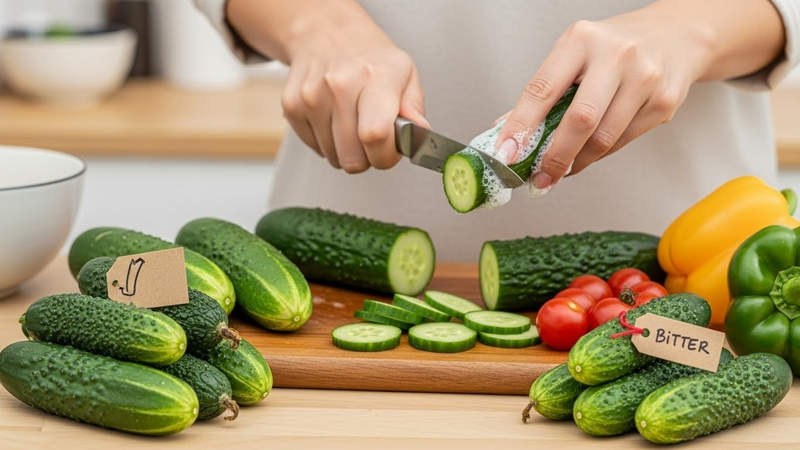
- Trimming ends and scraping skin: Begin by removing approximately 1-2 cm from both ends of the cucumber, paying particular attention to the stem end where bitterness is most pronounced. Additionally, gently scrape the skin near the stem with a knife or peeler. This action helps to remove the highest concentration of cucurbitacins residing just beneath the surface.
- Brining: Submerging sliced or whole cucumbers in a saline solution can draw out bitter compounds through osmosis. Prepare a solution using 2 tablespoons of salt per liter of water and immerse the cucumbers for 2-3 hours. The salt actively pulls moisture and dissolved bitter substances from the cucumber flesh. After brining, rinse the cucumbers thoroughly under cold running water to remove excess salt and any surface bitterness.
- Blanching: A brief thermal treatment followed by rapid cooling can also reduce bitterness.
- Submerge cucumbers in rapidly boiling water for 1-2 minutes. This heat exposure can help denature some bitter compounds or facilitate their release.
- Immediately transfer the cucumbers to an ice bath to halt the cooking process and preserve their crisp texture.
- Thoroughly dry the blanched cucumbers before proceeding with further preparation.
Strategic preservation and culinary applications
When preserving or cooking with slightly bitter cucumbers, certain additions can effectively neutralize or mask the undesirable taste.
- Neutralizing agents in pickling: For pickling or marinating, incorporating specific ingredients into the brine can balance bitterness.
- Honey (1-2 tablespoons per liter of brine)
- Brown sugar (3-4 tablespoons per liter)
- Spices such as dill, garlic, horseradish, and bay leaf not only add aromatic depth but also help to mask any lingering bitter notes.
- Vinegar and sugar adjustments: When preparing pickled cucumbers, opting for apple cider vinegar instead of spirit vinegar provides a milder acidity. Increasing the sugar content in the brine by approximately 25% beyond standard recipes further helps to counteract and balance the bitter taste.
- Culinary masking in salads: Slightly bitter cucumbers can be transformed into vibrant salads by pairing them with ingredients that naturally complement or mask bitterness.
- Natural yogurt, fresh mint, and minced garlic create a cooling, herbaceous counterpoint.
- Sour cream, fragrant dill, and a squeeze of lemon juice offer a creamy, tangy dressing that harmonizes with the cucumber.
- A dressing of honey, mustard, and olive oil provides a sweet and piquant contrast.
- Blanched cucumber spreads: Blanched cucumbers, even with a hint of bitterness, can be puréed into a delightful sandwich spread when combined with creamy quark cheese, pungent garlic, and fresh dill. In this context, a subtle bitterness can evolve into an intriguing flavor accent, adding complexity rather than detracting from the dish.