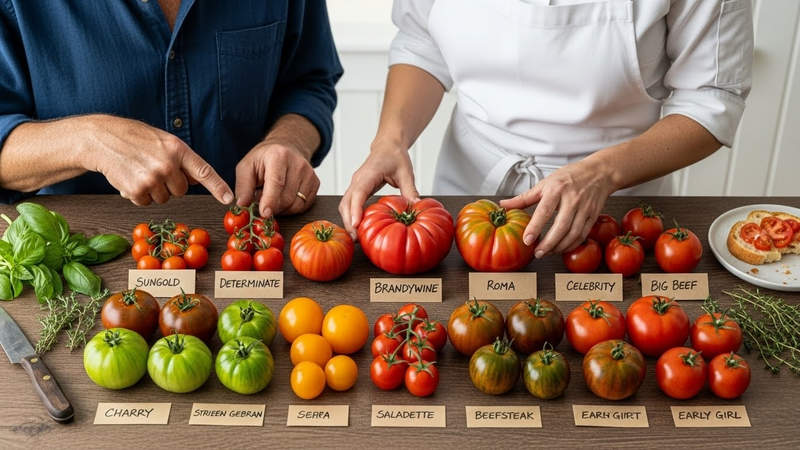
Why do some tomatoes burst with a sweet tang while others offer a deep, earthy umami? The secret lies in their astonishing diversity, a spectrum of characteristics meticulously cultivated to suit every palate and culinary ambition. Understanding these nuances transforms a simple ingredient into a versatile star, guiding home cooks and professional chefs alike to select the perfect fruit for any dish.
Growth habits and fruit dimensions
Tomatoes exhibit distinct growth patterns that dictate their cultivation needs and harvest cycles, alongside a broad range of fruit sizes tailored for specific uses.
Determinate versus indeterminate growth
Determinate varieties, often called “bush” tomatoes, exhibit a genetically programmed growth limit, typically reaching heights between 50 to 100 centimeters. Their growth culminates in a flower cluster at the terminal bud, signaling the cessation of new vegetative growth. This synchronized development means fruits ripen almost simultaneously, making them exceptionally efficient for large-scale field cultivation and processing operations where a concentrated harvest is paramount. Examples include Polfast, Hetman, and Mieszko.
In contrast, indeterminate tomatoes, known as “vining” types, continue to grow and produce fruit throughout the entire season until stopped by frost. These vigorous plants can reach impressive heights of 2 to 3 meters, continuously forming new leaves, flowers, and fruit clusters along their main stem. Their sprawling nature necessitates consistent structural support, such as stakes or trellises, and regular pruning of lateral shoots to manage their energy distribution. This sustained production offers a steady supply of fresh fruit over an extended period. Notable indeterminate varieties include Malinowy Ożarowski, Bawole Serce, and Gigant.
Categorization by fruit size
Tomato fruits span a remarkable range of sizes, each offering unique textural and culinary attributes.
| Category | Typical Weight (grams) | Characteristics | Example Varieties |
|---|---|---|---|
| Cocktail/Cherry | 15-35 | Small, often intensely sweet, perfect for snacking or garnishes. | Pokusa, Cherrola, Gartenperle |
| Medium-fruited | 70-150 | Versatile, balanced flavor, suitable for slicing, salads, and light cooking. | Malinowy Warszawski, Atol, Betalux |
| Large-fruited | 200 | Meaty, substantial, ideal for sandwiches, burgers, and robust sauces. | Gigant, Bawole Serce, Brutus |
Color spectrum and culinary applications
The vibrant palette of tomatoes extends far beyond mere aesthetics, signaling distinct flavor profiles and nutritional compositions. Each hue whispers a different culinary story, from bright acidity to deep, smoky sweetness.
Black and purple varieties, such as Black Cherry or Cherokee Purple, owe their deep, alluring shades to a higher concentration of anthocyanins. These potent antioxidants contribute to an intensely sweet-sour flavor profile, often accompanied by intriguing smoky undertones that add complexity to salads and fresh preparations.
Red tomatoes, exemplified by Malinowy Retro and Krakus, are celebrated for their rich lycopene content, a powerful antioxidant responsible for their classic crimson hue. Their flavor often leans towards a quintessential balance of sweetness and acidity, making them a kitchen staple.
Yellow and orange varieties, like Złoty Ożarowski and Sunrise Bumble Bee, typically present a milder, less acidic taste. Their gentle sweetness and lower tartness make them excellent choices for those sensitive to acidity or for dishes where a softer tomato presence is desired.
Pink tomatoes, including Malinowy Warszawski and Bawole Serce, are renowned for their exquisite balance of sweetness and acidity. Their tender flesh and delicate flavor make them highly prized for fresh eating, where their nuanced character can truly shine.
Finally, green tomatoes, specifically those that are ripe (not unripe), such as Green Zebra and Emerald Evergreen, offer a refreshing, distinctly tart flavor. Their firm texture and bright acidity bring a lively zest to salsas, salads, and fried preparations.
Beyond color, tomatoes are also categorized by their optimal culinary use:
- Fresh eating/Dessert varieties burst with juice and sweetness, making them perfect for immediate consumption, salads, or light appetizers.
- Processing tomatoes are characterized by a denser flesh, fewer seeds, and less liquid content. This makes them ideal for crafting rich sauces, pastes, and purees, as their concentrated solids yield a more substantial product.
- Universal types strike a harmonious balance, possessing qualities that allow them to perform admirably in both fresh applications and cooked preparations.
In many regions, varieties like Malinowy Warszawski (pink, medium-fruited), Bawole Serce (pink, large-fruited), Koralik (cocktail), Polbig (large-fruited), and San Marzano (processing) are particularly popular, reflecting a preference for specific flavor profiles and textures.
The pursuit of exceptional tomato flavor
The quest for the most flavorful tomato hinges on a delicate interplay of genetics, cultivation practices, and ripeness. Truly exceptional tomatoes achieve a sublime equilibrium between sweetness and acidity, delivering an aromatic intensity and a satisfying flesh consistency that elevates any dish.
Cultivars lauded for their flavor
Raspberry (Malinowe) tomatoes consistently rank high for their intense, sweet taste underscored by a delicate acidity. Varieties such as Malinowy Warszawski and Malinowy Ożarowski are celebrated for their distinctive aroma and meaty texture. Their characteristic pinkish-red hue and often ribbed skin are visual cues to their exceptional quality.
Among the myriad cocktail tomatoes, certain cultivars stand out for their concentrated flavor:
- Sungreen offers a sweet, intensely aromatic experience.
- Sungold F1 is distinguished by its remarkably high sugar content, delivering a burst of pure sweetness.
- Black Cherry provides a deep, complex flavor profile, marrying sweetness with subtle savory notes.
Traditional varieties have long held their esteemed place in culinary traditions due to their proven taste:
- San Marzano is the gold standard for sauces, its elongated, meaty flesh containing minimal seeds, which cooks down into a rich, velvety consistency.
- The classic Beefsteak tomato is prized for its robust, intense tomato aroma and substantial slices.
- Oxheart (Wołowe Serce) varieties are cherished for their sweet, low-acid taste and minimal juice, making them excellent for fresh eating or gentle cooking.
Specific Polish varieties also merit attention for their outstanding flavor: Złoty Ożarowski delivers exceptional sweetness, Gigant Kujawski is valued for its dense, meaty flesh, and Babinicz offers a beautifully balanced flavor profile.
Environmental influences on flavor development
The very essence of a tomato’s flavor is deeply intertwined with its growing conditions. Plants cultivated under abundant sunlight, in nutrient-rich soil, and with judicious, moderate watering develop a significantly more intense aroma and flavor. The physiological stress induced by slightly restricted watering during the final stages of ripening prompts the plant to concentrate its sugars and aromatic compounds within the fruit, resulting in a more profound taste.
Seasonality plays an undeniable role in flavor superiority. Tomatoes harvested at their peak ripeness, typically from July through September, offer an unparalleled taste experience. The full spectrum of natural sunlight and optimal ambient temperatures during these months allows for the complete development of complex sugars and volatile aromatic compounds. While modern greenhouse technologies enable year-round production, tomatoes ripened in controlled environments rarely achieve the same depth and nuance of flavor as those matured naturally under the summer sun.
Selecting the right tomato for its intended culinary role is crucial. For robust sauces, the dense, low-seed characteristics of a San Marzano are unmatched. For vibrant salads, the aromatic complexity of raspberry varieties shines. For simple snacking, the concentrated sweetness of cocktail tomatoes provides a delightful pop.