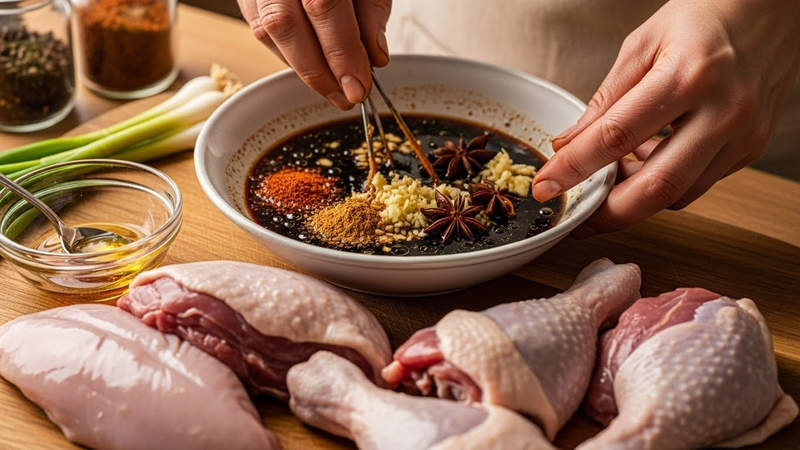
Why does a perfectly roasted duck, glistening with a deep, burnished skin and yielding tender, aromatic flesh, feel like a culinary triumph? The secret often lies not just in the cooking, but in the silent alchemy of a well-conceived marinade, particularly one built upon the savory foundation of soy.
The essence of a balanced duck marinade
A masterful duck marinade hinges on a symphony of flavors that tenderize the meat while infusing it with profound depth. Dark tamari soy sauce, typically boasting a 15-18% salt content, forms the bedrock, its umami-rich character penetrating deep into the muscle fibers. This savory base requires careful counterbalancing to achieve a complex profile that avoids excessive salinity.
Honey, ideally acacia or buckwheat for their nuanced sweetness, serves a dual purpose: it tempers the soy’s saltiness and, critically, provides the sugars necessary for the Maillard reaction during roasting, creating that coveted caramelized skin. Fresh ginger and garlic contribute pungent, aromatic notes, their volatile compounds weaving through the duck’s natural richness. Sichuan pepper introduces a tingling heat and citrusy aroma, while star anise and cinnamon sticks lend warm, exotic undertones, transforming the duck into an intensely fragrant centerpiece. Sesame oil, added later in the process, delivers a nutty richness that rounds out the flavor profile.
Proportional guide for the marinade
The precise ratio of ingredients ensures each element plays its part without overpowering the others, resulting in a harmonious blend that deeply flavors the duck.
| Ingredient | Quantity | Purpose |
|---|---|---|
| Dark Tamari Soy Sauce | 100 ml | Umami foundation, tenderizer, flavor carrier |
| Honey | 50 ml | Balances saltiness, promotes caramelization, adds subtle sweetness |
| Fresh Ginger | 30 g (grated) | Pungent aroma, digestive aid, adds warmth |
| Garlic | 4-6 cloves | Aromatic depth, savory notes |
| Sichuan Pepper | 1 tsp | Unique citrusy, floral, and tingling heat |
| Star Anise | 2 stars | Licorice-like, sweet, and warm aromatic |
| Cinnamon Stick | 1 stick | Earthy, sweet, and spicy warmth |
| Sesame Oil | 2 tbsp | Nutty aroma, richness, flavor enhancer (added later) |
Strategic marinating for various duck cuts
The duration a duck spends in marinade is not arbitrary; it’s a calculated decision based on the cut’s unique structure and desired outcome. Duck breasts, with their finer muscle fibers, require a shorter immersion, typically 4 to 6 hours. Extended marinating risks protein denaturation, leading to a “cooked” texture within the marinade itself and compromising the meat’s inherent succulence.
Conversely, duck thighs and drumsticks, encased in a thicker layer of fat and possessing denser muscle, benefit from a longer soak, around 8 to 12 hours. This extended period allows the marinade to permeate through the fat and deeply into the meat, ensuring robust flavor throughout. A whole duck, presenting the greatest challenge in uniform flavor penetration, thrives on a minimum of 12 hours, with optimal results achieved after a full 24-hour marination.
Maintaining a consistent temperature of 2-4°C throughout the marinating process is paramount. This cool environment inhibits bacterial growth, ensuring food safety while allowing for a slow, even absorption of flavors without prematurely altering the meat’s texture.
Enhancing marinade absorption
To maximize the marinade’s impact, gently score the duck skin in a crosshatch pattern before immersion. These shallow incisions, cutting through the fat layer but not into the meat, significantly increase the surface area for flavor absorption. This technique also facilitates more efficient fat rendering during cooking, contributing to a crispier skin.
Advanced techniques for soy-marinated duck
Achieving a truly exceptional soy-marinated duck involves more than just mixing ingredients; it demands a nuanced approach to preparation and cooking.
Two-stage flavor infusion
Professional chefs often employ a two-stage marinating process to build a complex, multi-layered flavor profile. The initial stage involves immersing the duck in a foundational marinade—soy, honey, garlic, ginger, and dry spices—for 4 to 6 hours in the refrigerator. This allows the primary savory and sweet notes to begin their deep penetration.
For the second, intensifying stage, the duck is removed from the initial marinade, patted thoroughly dry with paper towels to ensure optimal adhesion, and then returned to the marinade, which has been enriched with fat-soluble components like sesame oil and a splash of orange juice. This second phase, lasting an additional 8 to 12 hours under refrigeration, allows these more delicate aromas to slowly infuse, creating a truly multi-dimensional taste experience. Patting the duck dry before the second stage ensures a concentrated flavor exchange, as surface moisture can dilute the marinade’s potency.
Maximizing marinade’s reach
To further aid the marinade’s journey into the duck’s interior, precise piercing of the meat is highly effective. Using a fork or a dedicated meat tenderizer, create small, shallow punctures approximately every 2 centimeters, focusing on the thicker sections of the thighs and breasts. Angling the punctures at 45 degrees minimizes damage to muscle fibers, allowing deeper marinade penetration without significant juice loss during cooking.
Any remaining marinade after the duck has been removed should not be discarded. It can be transformed into a rich, velvety sauce by reducing it in a pan with a splash of chicken broth and a knob of butter. The simmering process concentrates the flavors, while the butter emulsifies, yielding a glossy, savory accompaniment that perfectly complements the roasted duck.
Achieving a sublime, crispy skin
The hallmark of a perfectly roasted duck is its impossibly crisp skin, a textural counterpoint to the tender meat. After marinating, thoroughly pat the duck dry to eliminate all surface moisture; this is crucial for the Maillard reaction and fat rendering. Brush the skin with a glaze of honey and soy sauce in a 2:1 ratio. This sugary coating will caramelize beautifully, deepening the color and adding a subtle sweetness.
Begin roasting the duck at a high temperature, around 220°C, for the initial 15 minutes. This intense heat rapidly renders the subcutaneous fat and crisps the skin. Subsequently, reduce the oven temperature to 160°C and continue roasting, basting the duck every 20 minutes with its own rendered fat. This lower temperature ensures the meat cooks evenly and remains succulent, while the regular basting promotes an even, shimmering golden-brown crust, locking in all the complex Asian-inspired notes.