Step-by-step recipe for a Polish chicken soup
Rosół: A golden embrace of Polish culinary heritage
The ‘Rosół’—a Polish term for a clear, aromatic broth, often served as a foundational soup—is a true cornerstone of Polish cuisine. This golden, deeply flavorful broth, traditionally simmered gently over low heat, embodies the warmth of home and cherished family traditions. The secret to an exceptional Rosół lies in the quality of the chicken and a thoughtfully selected array of root vegetables. A particularly effective technique to develop its unique depth and color involves charring an onion directly over a flame before adding it to the pot. This process initiates the Maillard reaction and caramelization, creating complex savory notes and a richer, amber hue that elevates the broth’s overall profile. The slow cooking also allows collagen from the chicken bones to break down into gelatin, contributing to a rich mouthfeel and body.
Who will savor this classic?
Rosół offers a comforting embrace for all who appreciate the nuanced simplicity of traditional Polish cooking. It particularly resonates with those who seek warming, restorative dishes that provide a gentle energy boost. Beyond its immediate sensory appeal, Rosół connects generations, serving as a delicious link to enduring family culinary legacies.
When to enjoy this culinary cornerstone
Traditionally, Sunday lunch provides the quintessential setting for Rosół, allowing families to gather unhurriedly around the table. Its aromatic presence truly shines in these moments of shared connection. This warming soup also holds an indispensable place in significant family celebrations, often serving as the initial, comforting course that sets the tone for the meal.
Mastering the art of Rosół: essential tips
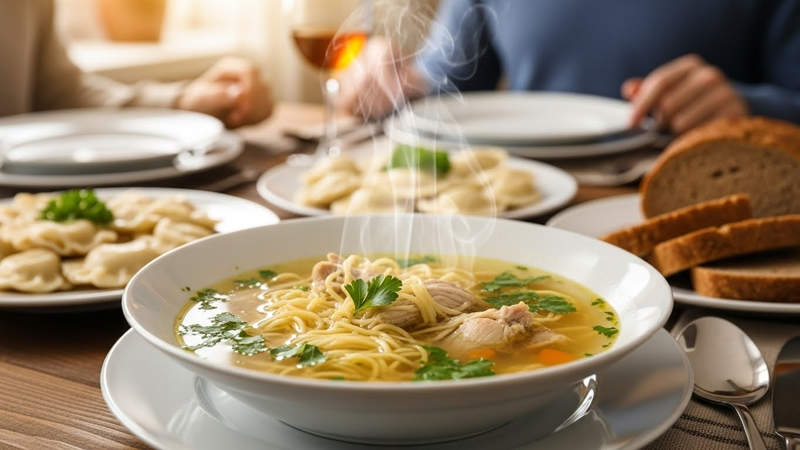
Authentic Polish Rosół is typically served with thin, delicate ‘nitki’ pasta, tender diced carrots, and a generous sprinkle of fresh, chopped parsley. The pasta, when cooked directly in the broth or added just before serving, absorbs the rich flavors and provides a satisfying textural contrast through starch gelatinization. For optimal aromatic release and sensory enjoyment, the broth must be served piping hot, allowing its volatile compounds to fully bloom. Remember to diligently skim any foam (scum) that rises to the surface during the initial simmering; this crucial step removes denatured proteins, ensuring a crystal-clear, visually appealing broth.
Elevating your Rosół: creative variations and dietary adaptations
While classic Rosół centers on chicken, culinary exploration can lead to exciting variations. Consider enriching your broth with cuts of turkey, duck, goose, or even beef for distinct flavor profiles. Many chefs also enhance their Rosół with lovage, often called the ‘magic herb’ of the kitchen, which imparts a deep, earthy, and subtly celery-like aroma. For a fresher, slightly herbaceous note, try adding stalks of celery during the simmering process.
For those seeking plant-based alternatives, a rich, umami-driven vegetable broth can serve as an excellent foundation. Consider simmering a medley of roasted root vegetables, dried porcini mushrooms, and a charred onion for a comparable depth of flavor. Instead of traditional meat, substantial additions like pan-seared smoked tofu, hearty lentils, or various cultivated mushrooms (such as cremini or shiitake) can provide satisfying protein and textural complexity, ensuring a fulfilling and flavorful experience for all.