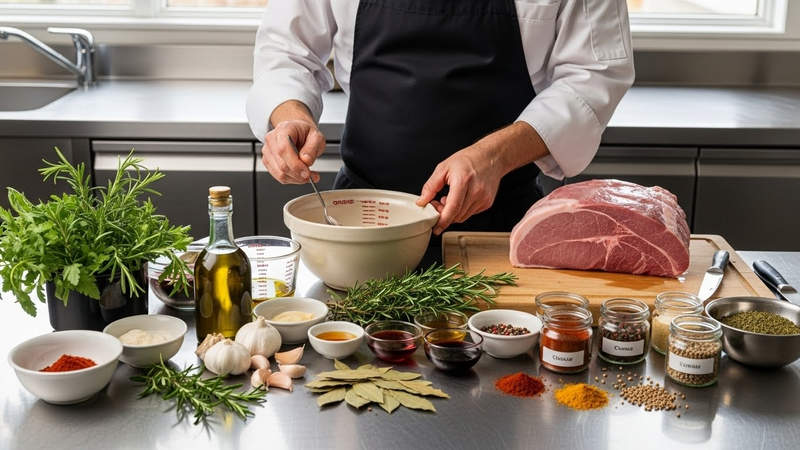
Unlocking Succulence: The Science of Marinating Ham for Perfect Roasting
Ever wonder why some roasted hams emerge dry and bland, while others glisten with a rich, juicy interior and complex, aromatic depth? The secret lies in the marinade, a chemical process that fundamentally transforms the meat. Acids within the marinade initiate the breakdown of tough collagen fibers, leading to a significant increase in the tenderness of the finished product. Simultaneously, the marinade permeates deeply into the meat’s structure, carrying a symphony of aromas and spices to its core, ensuring a uniform flavor profile throughout the entire cut. This intricate process also bolsters moisture retention; properly marinated ham can hold significantly more moisture during roasting compared to unmarinated meat, directly translating to a remarkably succulent final product and mitigating the risk of dryness, even during extended cooking periods.
Essential components for ham marinades
An effective ham marinade demands a precise balance of three key elements, each contributing uniquely to the meat’s texture and flavor.
- Acidic foundation: These components initiate the crucial breakdown of muscle fibers, enhancing tenderness.
- Dry white wine (Riesling or Pinot Grigio offers nuanced fruit notes)
- Apple cider vinegar (5-6% acidity provides a gentle tang)
- Freshly squeezed lemon juice (brightens flavors and adds zest)
- Fat carriers: These are indispensable for dissolving and transporting fat-soluble flavor compounds throughout the meat, while also providing a protective layer against moisture loss during cooking.
- Extra virgin olive oil (imparts a grassy, peppery note)
- Clarified butter (offers a rich, nutty depth)
- 18% cream (for a velvety, emulsified marinade)
- Aromatic elements: These infuse the ham with complex, layered flavors.
- Garlic (a minimum of 4-5 cloves per kilogram of meat for robust flavor)
- Fresh rosemary (whole sprigs release piney, resinous notes)
- Thyme (earthy, slightly floral undertones)
- Marjoram (a delicate, sweet herbaceousness)
- Juniper berries (2-3 berries per 500g of meat for a distinct, slightly peppery aroma)
- Freshly ground black pepper (adds pungent heat and aroma)
A harmonious proportion for a balanced marinade is typically a 2:1:1 ratio of acid to fat to aromatics. For a 1.5 kg ham, approximately 300-350 ml of marinade ensures ample coverage and penetration.
Optimal marinating durations and meat selection
The ideal marinating period varies depending on the specific cut of ham, reflecting differences in muscle density and fiber structure.
- Pork leg ham: 12-24 hours (18 hours often yields the most tender and flavorful results)
- Pork shoulder ham: 8-16 hours (its inherently more tender structure requires less time)
- Beef ham: 24-48 hours (the denser muscle fibers benefit from extended exposure)
Selecting the right cut of meat is paramount for a successful roast.
- Marbling: A moderate amount of intramuscular fat ensures a juicy, succulent outcome.
- Freshness: The meat should exhibit a uniform, vibrant color, devoid of any graying or discoloration.
- Size: An optimal piece weighs between 1.5-2 kg, allowing for consistent marinade penetration and even cooking.
Before introducing the ham to the marinade, meticulously trim away any tough membranes and excessive external fat. These layers can impede the marinade’s ability to permeate the meat. Additionally, scoring the surface of the ham with shallow, crosshatch incisions, approximately 5 mm deep, can increase the surface area for marinade contact by up to 30%, significantly enhancing flavor absorption.
Proven recipes for roasted ham marinades
Classic honey-mustard marinade with herbs
The secret to an exquisitely roasted ham often begins with this balanced honey-mustard marinade. Combine 4 tablespoons of liquid honey with 3 tablespoons of Dijon mustard and 2 tablespoons of whole-grain mustard. Introduce freshly ground black pepper, sea salt, 2 tablespoons of dried thyme, and 1 tablespoon of dried rosemary. Finish the blend with 3 tablespoons of extra virgin olive oil and the juice of half a lemon. This marinade strikes a delicate equilibrium between the honey’s sweetness and the mustard’s pungent brightness, allowing the ham’s natural savory essence to shine through.
For an added layer of complexity and depth, incorporate 2 tablespoons of whisky or brandy into the marinade. The alcohol evaporates during roasting, leaving behind only its rich, aromatic essence.
Aromatic garlic and rosemary marinade
This intensely flavored composition relies on the potent combination of fresh herbs and garlic. Begin with a base of 6 crushed garlic cloves, 4 finely chopped fresh rosemary sprigs, and 2 fresh thyme sprigs. Whisk in 3 tablespoons of first-press olive oil, 2 tablespoons of balsamic vinegar, 1 teaspoon of dried oregano, and a generous seasoning of salt and pepper. For a subtle smoky undertone, consider enriching the marinade with 1 teaspoon of smoked paprika.
Sweet and sour orange and cranberry marinade
This unconventional marinade marries the vibrant acidity of freshly squeezed juice from 2 oranges with 1/2 cup of dried cranberries, previously plumped in hot water. Stir in 3 tablespoons of honey, 1 tablespoon of mustard, 2 tablespoons of olive oil, one star anise pod, 2 cloves, and a pinch of cinnamon. This blend bestows a distinctive festive character upon the ham, imparting a subtly sweet flavor beautifully balanced by the citrus’s tang.
Oriental soy and ginger marinade
A culinary fusion at its finest, this marinade combines 4 tablespoons of soy sauce (preferably low-sodium) with 2 tablespoons of honey, 1 tablespoon of grated fresh ginger, 2 minced garlic cloves, and 1 teaspoon of sambal oelek paste (or half a teaspoon of chili flakes for a milder heat). Incorporate 2 tablespoons of sesame oil and the juice of a lime. This dynamic marinade infuses the ham with a profound umami character, punctuated by a delicate, spicy warmth.
Techniques for marinade application and the roasting process
The efficacy of a marinade is significantly influenced by its application method.
- Rubbing: The most common technique involves thoroughly coating the entire surface of the ham with the marinade, then refrigerating it for 12-24 hours. Turning the meat every few hours ensures even distribution and penetration.
- Injecting: Utilizing a specialized kitchen syringe, this method introduces the marinade directly into the deeper muscle tissues. This technique dramatically reduces marinating time to 6-8 hours and guarantees a uniform flavor distribution throughout the ham.
- Submerging: This involves placing the ham entirely within a container of marinade, often in a zip-top bag. While requiring the largest volume of marinade, it offers comprehensive and consistent coverage.
During the roasting of marinated ham, several critical steps ensure a tender, flavorful, and perfectly cooked result.
- Allow the ham to come to room temperature by removing it from the refrigerator 30 minutes before roasting.
- Begin roasting at 160°C for the initial 30 minutes, then reduce the oven temperature to 140°C for the remainder of the cooking time.
- Baste the ham every 20-30 minutes with the accumulated pan juices or reserved marinade to maintain moisture and build flavor.
- Employ a meat thermometer to accurately gauge doneness; the ideal internal temperature for ham is 75-78°C.
- Once roasted, allow the ham to rest, tented loosely with aluminum foil, for 15-20 minutes before carving. This crucial resting period permits the muscle fibers to relax and reabsorb juices, ensuring maximum succulence.
Reserve a portion of the marinade that has not come into contact with raw meat. Heat this reserved marinade and use it to baste the ham during the final 30 minutes of roasting. This technique will create a shimmering, appetizing glaze.