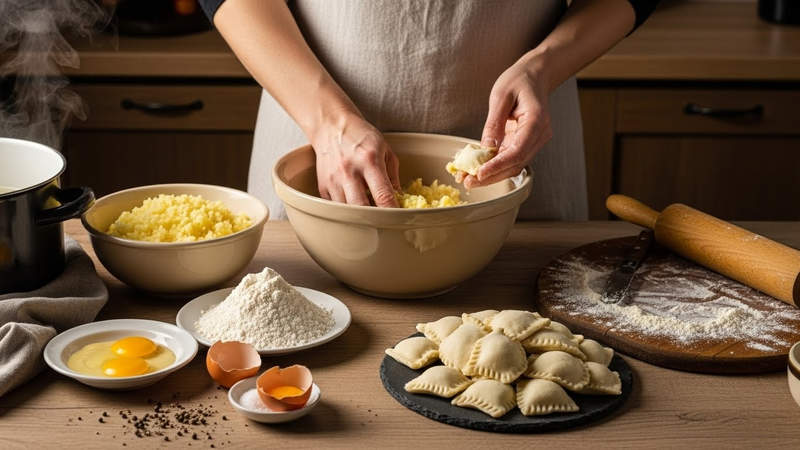
Why do some potato dumplings dissolve into a starchy cloud, while others emerge as perfectly pillowy morsels? The secret lies in a delicate balance of ingredients and technique, a culinary dance where every step matters.
Essential kopytka components and their interplay
Kopytka, traditional Polish potato dumplings, rely on a surprisingly short list of ingredients, each playing a crucial role in achieving their signature texture. The precise ratio ensures the dough is pliable enough to shape yet robust enough to withstand boiling without disintegrating.
- 1 kg starchy potatoes: These form the structural backbone, providing the necessary starch for a light, fluffy interior.
- 200-250 g wheat flour: The binding agent, offering just enough gluten development to hold the dumplings together.
- 1 large egg: Acts as an emulsifier and binder, contributing to a smoother dough and richer flavor.
- 1 teaspoon salt: Essential for seasoning the potatoes and enhancing overall taste.
- Pinch of freshly grated nutmeg (optional): A subtle aromatic accent that complements the earthy potato flavor.
The ideal proportion of potatoes to flour hovers around 4:1 by weight. This ratio is critical: too little flour, and the dumplings risk becoming waterlogged and falling apart in the boiling water; too much, and they transform into dense, rubbery spheres. The flour quantity is not absolute; it adapts to the inherent moisture content of the cooked potatoes, which can vary significantly. Adding flour gradually, until the dough is supple and no longer adheres to the hands, ensures optimal elasticity without excess stickiness.
Selecting the right potatoes and infusing flavor
The foundation of exceptional kopytka begins with the potato. Opting for starchy potato varieties with a high dry matter content is paramount. These potatoes, rich in amylose, break down into a fine, crumbly texture when cooked, making them effortless to rice or mash into a smooth, lump-free base. This quality allows for minimal flour addition, preserving the delicate potato flavor and yielding a lighter dumpling.
Recommended starchy varieties:
- Irga
- Bryza
- Tajfun
Conversely, waxy potato types, with their higher moisture and lower starch content, tend to become gluey and dense when processed, demanding more flour and resulting in a heavier, less desirable kopytka.
Beyond the basic potato and flour, kopytka offer a versatile canvas for flavor exploration. Incorporating additional ingredients can transform the dumplings into a more complex and satisfying dish.
| Flavor Addition | Quantity & Preparation | Impact on Kopytka |
|---|---|---|
| Grated yellow cheese | 50-100 g, finely grated and folded into the dough | Adds a savory depth and a subtle, creamy texture. |
| Fresh herbs | 2-3 tablespoons, finely chopped (dill, parsley, chives) | Introduces bright, aromatic notes and visual appeal. |
| Blanched spinach | 100 g, thoroughly squeezed dry and finely chopped | Imparts an earthy flavor and a vibrant green hue. |
| Smoked bacon | 100 g, pan-fried until crisp, then finely diced | Delivers a rich, smoky, and salty counterpoint. |
| Dried mushrooms | 30 g, soaked, cooked, and finely minced | Offers a deep umami flavor and a rustic texture. |
For a truly delicate kopytka, consider cooking the potatoes a day in advance and chilling them thoroughly in the refrigerator. This process allows the starches to retrogradate, effectively reducing the potato’s moisture content. The result is a drier potato mass that requires less flour, contributing to an even more tender and ethereal dumpling.
The meticulous process of kopytka preparation
Achieving the perfect kopytka involves a sequence of precise steps, from potato treatment to final cooking, each influencing the ultimate texture and flavor.
Foundations of kopytka dough
The journey to exceptional kopytka begins with the careful preparation of the potatoes. Boiling them in their jackets, rather than peeled, prevents excessive water absorption, preserving their starchy integrity. Cook them until tender, approximately 25-30 minutes, ensuring they are soft but not waterlogged. Immediately after cooking, peel the potatoes and pass them through a potato ricer or fine-mesh sieve while they are still steaming hot. This crucial step breaks down the starch cells uniformly, yielding a silky-smooth, lump-free base. The residual heat helps to evaporate excess moisture, concentrating the potato flavor.
Crucially, the riced potato mass must cool completely before any other ingredients are incorporated. Introducing flour and egg to warm potatoes can lead to a sticky, unmanageable dough, as the heat can prematurely activate gluten and cause the starch to become overly gelatinous. Once cooled, combine the riced potatoes with the wheat flour, egg, salt, and optional nutmeg. The kneading technique here is paramount: work the dough gently, just until the ingredients are uniformly combined. Overworking the dough develops gluten excessively, resulting in a dense, tough kopytka that lacks the desired pillowy softness. The finished dough should feel pliable and elastic, yielding to the touch without sticking. If it feels overly tacky, incorporate a small amount of additional flour, a tablespoon at a time, until the ideal consistency is achieved.
Forming and cooking kopytka with precision
Once the dough is prepared, shaping the kopytka can be approached in two primary ways. The manual method involves dividing the dough into several portions, typically four or five. Each portion is then rolled into a uniform rope, approximately 2-3 centimeters in diameter, on a lightly floured surface. These ropes are then cut diagonally into segments about 2 centimeters long, creating the characteristic diamond shape. Alternatively, a traditional kopytka board, featuring parallel grooves, can be employed. The dough is pressed onto the board, picking up the distinctive ridged pattern, before being cut into small, rectangular pieces. The ridges are not merely decorative; they increase the surface area, allowing sauces to cling more effectively.
Cooking kopytka demands precise timing to achieve a tender yet structured dumpling. Bring a large pot of generously salted water to a rolling boil. Introduce the kopytka in small batches to avoid overcrowding the pot, which can lower the water temperature and lead to uneven cooking or sticking. Maintain a medium boil; a vigorous boil can agitate the delicate dumplings, causing them to break apart. The kopytka are ready when they float to the surface, signaling that their internal temperature has risen sufficiently and the starch has fully gelatinized. Allow them to simmer for an additional 1-2 minutes after surfacing to ensure thorough cooking. Promptly remove them from the water with a slotted spoon, allowing excess water to drain. Prolonged immersion in the hot water will cause them to absorb too much liquid, leading to a soft, mushy texture.
Freshly cooked kopytka are best served immediately, their warm, yielding texture a perfect vehicle for rich sauces. A classic accompaniment is melted butter infused with golden, toasted breadcrumbs, which provides a delightful textural contrast and nutty aroma. Creamy mushroom sauces also pair exquisitely, their earthy notes complementing the subtle potato flavor. For convenience, kopytka can be stored in an airtight container in the refrigerator for up to two days, or frozen for up to three months. When reheating, gently warm them in a pan with a touch of butter to restore their exterior crispness, or briefly microwave them for a softer finish. The versatility of kopytka extends to vibrant variations, such as incorporating 200g of blanched and thoroughly squeezed spinach for an earthy, green dumpling, 150g of cooked and grated beetroot for a sweet, crimson hue, or 200g of roasted and puréed pumpkin for a subtly sweet and golden-orange dumpling. These additions not only introduce new flavors and visual appeal but also enrich the kopytka with additional nutrients.