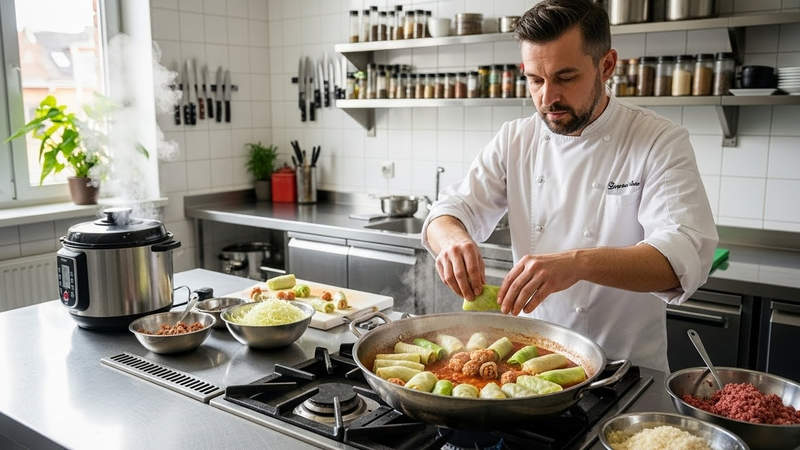
How do you ensure every bite of gołąbki is a symphony of tender cabbage and perfectly cooked filling, without the dreaded mushy rice or raw meat? The secret lies not just in the recipe, but in understanding the nuanced techniques and equipment that transform simple ingredients into a culinary masterpiece.
Diverse methods for cooking gołąbki
The journey to perfectly tender gołąbki can take several paths, each offering distinct advantages in terms of time, texture, and flavor depth.
Traditional pot simmering
Cooking gołąbki in a traditional pot demands patience, typically requiring 45 to 60 minutes once the liquid reaches a boil. Arrange the cabbage rolls in a single layer within the pot, ensuring they are fully submerged in water or vegetable broth. Once boiling, reduce the heat to a gentle simmer and cover the pot. This slow, steady heat is crucial; vigorous boiling can cause the delicate cabbage leaves to unravel and the rolls to disintegrate, compromising their structural integrity. Simmering allows the cabbage to soften gradually, transforming from crisp to a silky, yielding texture, while the filling cooks evenly, absorbing the savory liquid.
Pressure cooker efficiency
For those moments when time is a precious commodity, a pressure cooker dramatically shortens the cooking duration to a mere 15 to 20 minutes. Position the gołąbki on a rack above approximately 1.5 cups of water at the bottom of the pressure cooker. The sealed environment elevates the boiling point of water, creating superheated steam that penetrates the cabbage rolls rapidly, accelerating the cooking process. Once the cooking cycle completes, allow the pressure to release naturally for a few minutes before opening the cooker. This gradual depressurization prevents the sudden expulsion of steam from tearing the delicate cabbage leaves, ensuring the gołąbki remain intact and beautifully formed.
Oven baking for profound flavors
Baking gołąbki in the oven, a process spanning 90 to 120 minutes at 180°C (350°F), rewards the patient cook with an exceptional depth of flavor. This slow, even heat allows the ingredients to meld harmoniously, developing rich, caramelized notes in the sauce and a tender, succulent filling. Arrange the gołąbki snugly in an oven-safe dish, then generously bathe them in tomato sauce or broth. Cover the dish with aluminum foil to trap moisture, promoting a steamy environment that tenderizes the cabbage. For the final 15 to 20 minutes, remove the foil; this allows the sauce to reduce and concentrate, developing a velvety texture and an intensified, savory aroma.
Assessing the perfect doneness of gołąbki
Achieving the ideal gołąbki means striking a balance where every component is cooked through, yet retains its integrity. Overcooking can lead to a mushy, fragmented dish, while undercooking leaves a raw, unappealing texture.
Properly cooked gołąbki exhibit specific characteristics:
- Cabbage leaf: The outer cabbage leaf should be soft and pliable, offering no resistance when pierced with a fork. This indicates the cellulose fibers have sufficiently broken down, yielding a tender wrapper.
- Filling integrity: The internal filling must be thoroughly cooked. A cross-section should reveal no traces of raw meat, signifying that proteins have fully denatured and are safe for consumption.
- Rice texture: The rice within the filling should be soft and fully hydrated, yet distinct, avoiding any gummy or mushy consistency. Starch granules should be gelatinized, but not overcooked to the point of disintegration.
- Sauce consistency: The accompanying sauce will have thickened and deepened in flavor, clinging beautifully to the gołąbki rather than appearing watery.
To verify doneness, carefully remove one gołąbek and slice it in half. Observe the texture of the cabbage and the color and consistency of the filling. If the cabbage yields easily and the filling is uniformly cooked, the entire batch is ready to be savored.
Factors influencing gołąbki cooking duration
Several elements critically influence how long gołąbki need to cook, from their physical dimensions to the very composition of their savory core. Understanding these variables allows for precise adjustments, ensuring consistently perfect results.
Gołąbki dimensions and filling composition
The physical size of each gołąbek significantly dictates its cooking time. Standard gołąbki, typically measuring 8-10 cm, generally require 45-60 minutes to cook through. Miniature versions, around 5-6 cm, will be ready more quickly, often within 30-40 minutes. Conversely, larger gołąbki exceeding 12 cm in length may demand an extended cooking period, potentially 75-90 minutes, to ensure the filling reaches a safe and palatable internal temperature.
The type of filling also plays a crucial role in cooking duration:
| Filling Type | Estimated Cooking Time (Standard Size) | Key Consideration |
|---|---|---|
| Meat-based | 50-60 minutes | Raw meat requires the longest cooking time to reach an internal temperature of 75°C, ensuring protein coagulation and food safety. |
| Grain-based | 40-50 minutes | Fillings predominantly featuring grains like buckwheat or barley cook faster as starch gelatinization occurs more quickly than meat protein cooking. |
| Vegetarian | 35-45 minutes | Vegetable and mushroom-based fillings cook the fastest, as their cellular structures break down more readily. |
When combining different ingredients, such as rice with meat, the overall cooking time must align with the component that requires the longest duration to cook thoroughly and safely.
Strategic preparation for accelerated cooking
Certain preparation techniques can significantly reduce the overall cooking time for gołąbki, without compromising flavor or texture.
Blanching cabbage leaves before rolling is a powerful time-saver, potentially shaving 15-20 minutes off the total cooking time. This brief immersion, typically 2-3 minutes in boiling water, softens the tough cellulose fibers in the cabbage, making the leaves pliable for rolling and partially pre-cooking them. Properly blanched leaves will be supple and slightly translucent but still retain their structural integrity; under-blanched leaves will remain stiff and require longer cooking, negating the time-saving benefit.
The tomato sauce enveloping the gołąbki serves a dual purpose beyond mere flavor:
- It provides essential moisture, crucial for the cabbage leaves to tenderize and achieve their characteristic softness.
- Its inherent acidity actively accelerates the breakdown of cellulose fibers in the cabbage, contributing to a faster cooking process.
Incorporating 2-3 tablespoons of apple cider vinegar into the tomato sauce can further shorten cooking time by approximately 10 minutes. The additional acidity enhances the hydrolytic breakdown of pectin and cellulose within the cabbage, while also imparting a subtle, aromatic tang to the dish.
Effective techniques to expedite the cooking of gołąbki:
- Cooking under cover: Maintaining a lid on the pot or dish traps heat and moisture, creating a more efficient cooking environment that can reduce cooking time by 15-20%.
- Pre-cooking the filling: Partially cooking the filling, especially meat-based mixtures, before rolling can reduce the final cooking time by around 15 minutes. This ensures the internal components are already well on their way to doneness.
- Piercing gołąbki: Gently pricking each gołąbek in 2-3 spots with a skewer allows for better heat penetration into the core of the roll, facilitating more rapid and even cooking.
- Initial browning: A quick sauté of the gołąbki in a pan until lightly golden before braising or simmering not only develops a deeper, richer flavor through the Maillard reaction but also provides an initial burst of heat, shortening the subsequent cooking by approximately 10 minutes.