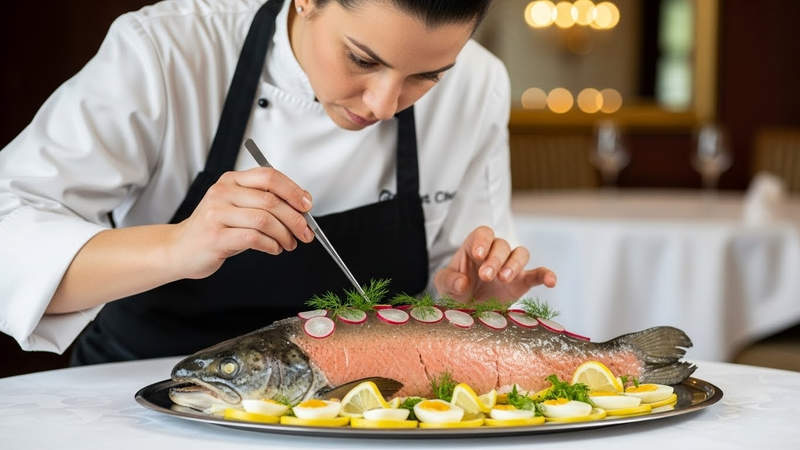
Achieving an aspic that shimmers with jewel-like clarity, encasing tender fish and vibrant garnishes, elevates a simple dish into a captivating culinary statement. What are the secrets to this delicate balance of flavor, texture, and visual perfection?
Selecting the perfect fish and foundational ingredients
The cornerstone of an exceptional fish in aspic lies in the quality of its primary component: the fish itself. Opt for species with firm, white flesh that holds its structure beautifully after gentle poaching. Carp offers a robust, festive character, while trout presents a delicate, nuanced flavor. Cod provides a distinct oceanic essence, and pike-perch is often lauded as the epitome of elegance for this preparation. Absolute freshness is paramount; only pristine fish yields an aspic of unparalleled transparency and ensures the integrity of its flavor.
Essential elements for the aromatic broth and the aspic’s structure include:
- Aromatic vegetables: Carrots, parsley root, celery root, and leek form the aromatic base, infusing the broth with earthy sweetness and depth.
- Spices: Bay leaves, allspice berries, and black peppercorns impart a subtle, warming complexity without overpowering the fish.
- Salt: Balances and enhances all flavors.
- Gelatin: High-quality gelatin, typically 10-12 grams per liter of broth, provides the structural integrity for the aspic. Natural pork gelatin is often preferred by culinary professionals for its superior elasticity and neutral flavor profile, ensuring the aspic sets with a delicate wobble rather than a rubbery chew, and allows the true taste of the fish to shine through.
- Decorative additions: Slices of hard-boiled egg, bright lemon wheels, tangy pickled cucumbers, and briny olives introduce visual appeal and complementary flavors.
Essential equipment and preparation techniques
Precision in preparation demands the right tools. Equipping your kitchen with these items streamlines the process and contributes to a flawless result:
- Large stockpot: An enameled pot is ideal for simmering the broth, preventing metallic flavors from leaching into the delicate liquid.
- Sharp filleting knife: Crucial for precise removal of bones and skin, maximizing the yield of pristine fish flesh.
- Fine-mesh sieve: Indispensable for clarifying the broth, ensuring a truly transparent aspic.
- Shallow, flat dish: Provides an optimal surface for cooling and setting the aspic evenly.
- Kitchen thermometer: Essential for maintaining the precise temperature during fish poaching, preventing overcooking and preserving its tender texture.
- Bone tweezers or kitchen pliers: Facilitate the meticulous removal of even the smallest pin bones, ensuring a pleasant eating experience.
Filleting and bone removal
Preparing the fish requires meticulous attention. Begin by thoroughly cleaning the fish, scaling it and removing all internal organs. Next, carefully fillet the fish along the backbone, aiming to retain the largest possible pieces of flesh. The critical step is the exhaustive removal of every bone. Even the smallest pin bones can be extracted with specialized tweezers or kitchen pliers, guaranteeing a smooth, enjoyable texture in the final dish.
Crafting the pristine broth and poaching the fish
The foundation of a successful fish in aspic is an aromatic, deeply flavored broth.
- Broth preparation: In a large pot, combine the aromatic vegetables (carrots, parsley root, celery root, leek) with bay leaves, allspice berries, and black peppercorns. Add 2 liters of cold water, along with the fish head and tail if available, as these contribute significant gelatin and flavor.
- Simmering: Gently simmer the mixture over low heat for approximately 40 minutes, diligently skimming any foam that rises to the surface. This removal of impurities is vital for broth clarity.
- Straining: Strain the broth through a fine-mesh sieve lined with cheesecloth. This step captures all solids, leaving behind a clean, fragrant liquid.
Poaching the fish demands a gentle hand and precise temperature control. Fish should be cooked in the prepared broth at a very low simmer, maintaining a temperature between 85-90°C (185-195°F), never allowing it to reach a rolling boil. Boiling causes the delicate fish proteins to seize and toughen, resulting in a dry, flaky texture rather than a succulent one.
The poaching time varies depending on the fish species and fillet thickness:
| Fish Type | Poaching Time (minutes) | Temperature (°C) |
|---|---|---|
| Carp, Pike-perch | 15-20 | 85-90 |
| Trout, Cod | 10-15 | 85-90 |
| Salmon | 12-18 | 85-90 |
A perfectly poached fish will feel delicately resilient to the touch, and its flesh will separate effortlessly from the bones. Once cooked, carefully remove the fish from the broth.
Clarifying the broth and setting the aspic
To achieve that signature crystal-clear aspic, the broth undergoes a crucial clarification process.
- Cooling and gelatin incorporation: Allow the strained broth to cool to approximately 60°C (140°F). For every liter of broth, whisk in 30-40 grams of gelatin, previously bloomed in cold water. Stir continuously until the gelatin is completely dissolved, again, without allowing the mixture to boil.
- Egg white clarification: A professional technique for ultimate clarity involves adding a whisked egg white (or egg white and crushed eggshells) to the warm broth. As the broth is gently heated (without boiling), the egg white proteins coagulate, attracting and trapping any remaining suspended impurities. This forms a “raft” on the surface.
- Final straining: Carefully ladle the clarified broth through a fine-mesh sieve lined with several layers of cheesecloth, allowing the pristine liquid to filter through. The result is a liquid so clear it resembles liquid glass.
Assembling and chilling the aspic
The final assembly transforms the individual components into a harmonious dish.
- Layering: Select a flat glass or ceramic dish with low sides. Artfully arrange thinly sliced decorative vegetables—such as carrot rounds, cucumber slices, and hard-boiled egg wedges—at the bottom of the dish. These form the visual base of your aspic.
- Fish placement: Carefully place boneless, skinless, and membrane-free portions of the poached fish over the vegetable layer.
- Pouring the aspic: Gently pour the cooled, yet still liquid, clarified aspic over the fish and vegetables. Pour slowly to avoid disturbing the arrangement.
- Chilling: Transfer the dish to the refrigerator and allow it to chill undisturbed for a minimum of 4-6 hours, or ideally, overnight. This extended chilling period ensures the gelatin sets fully, yielding a firm, yet yielding, aspic.
For a contemporary presentation, consider individual molds or elegant glasses. Layering colorful vegetables and fish within these smaller vessels creates striking mini-portions, perfect for a refined appetizer.
Serve the chilled fish in aspic with accompaniments such as a piquant horseradish sauce, a bright lemon mayonnaise, or a zesty mustard sauce. Store any remaining aspic in the refrigerator, tightly covered with food film, for up to 48 hours to maintain its freshness and pristine quality.