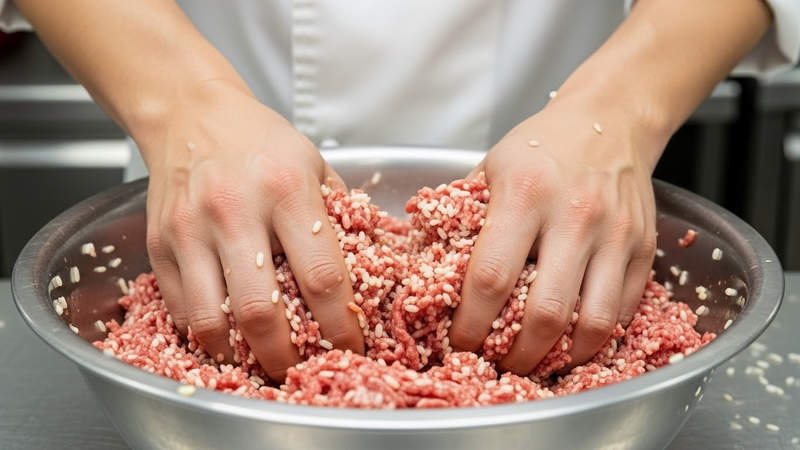
Unlocking the secret to truly memorable gołąbki lies not just in the cabbage, but in the meticulously balanced heart of the dish: its succulent filling.
The foundational balance: Rice and meat proportions
The classic ratio of rice to minced meat for gołąbki filling stands at 1:2, meaning one part rice to two parts meat. This proportion delivers an ideal consistency: sufficiently cohesive to prevent crumbling during the extended simmering process, yet remarkably juicy due to the generous meat content. For this balance to unfold perfectly, the rice must be cooked to an al dente stage, retaining a slight bite. This partial cooking allows the grains to continue expanding and absorbing the rich, savory juices released from the meat and surrounding sauce during the subsequent braising, contributing to a deeply flavored and tender final product.
While the 1:2 ratio is a time-honored standard, the balance can be adapted to personal preference, creating distinct textural and flavor profiles:
| Ratio (Rice:Meat) | Characteristics | Ideal Use Case |
|---|---|---|
| 1:1 | Lighter, with a more pronounced rice flavor | For those who prefer a less meat-forward, softer filling |
| 1:2 (Classic) | Balanced, succulent, and inherently cohesive | A versatile choice, embodying traditional expectations |
| 1:3 | Richly meaty, intensely flavorful, and substantial | Suited for robust, meat-centric palates |
Meat selection and its influence on filling texture
The choice of meat significantly impacts the filling’s optimal proportions and final texture. Fattier cuts of pork introduce a richness and moisture that can be balanced by slightly increasing the rice content, perhaps to a 1:1.5 ratio, preventing an overly greasy result. Conversely, leaner beef benefits from a higher meat-to-rice ratio, such as 1:2 or even 1:3, to ensure the filling remains exquisitely juicy and tender, counteracting its natural tendency to dry out. Many culinary experts consider a mixture of pork and beef, typically in a 2:1 ratio (pork to beef), to be the optimal choice. This blend harmonizes the succulence and richness of pork with the deeper, more complex flavor profile of beef, yielding a filling that is both flavorful and perfectly moist.
Cabbage leaf size and filling adaptability
The dimensions of the cabbage leaves themselves dictate the ideal filling composition. Smaller, more delicate leaves are best suited for a filling with a higher rice content, such as a 1:1 ratio. This lighter, more pliable mixture is easier to maneuver and wrap without tearing the tender leaves. Conversely, larger, more robust cabbage leaves possess the structural integrity and flexibility to encase a more substantial, meat-heavy filling, like those prepared with a 1:2 or 1:3 meat-to-rice ratio. Their generous size allows for a more voluminous filling, ensuring a satisfying bite.
Mastering the filling’s internal structure and moisture
Preparing rice for optimal cohesion
Achieving the perfect gołąbki filling hinges on the precise preparation of the rice. Cooking it to an al dente state, approximately 70% done, is paramount. Rice that is too soft will render the filling mushy, lacking textural integrity, while undercooked grains will remain unpleasantly firm even after the gołąbki have simmered. A crucial step involves rinsing the rice thoroughly both before and after cooking. This process effectively removes excess surface starch, preventing the grains from clumping together and ensuring each remains distinct, contributing to a lighter, more agreeable texture within the filling. The individual grains should feel separate and slightly firm, not sticky or pasty.
Techniques for combining ingredients and achieving succulence
The method of combining the filling ingredients is as critical as their selection. Vigorously kneading the mixture for a minimum of five minutes is essential. This physical manipulation activates the myosin proteins within the minced meat, causing them to form a cohesive matrix. This protein network acts as a natural binder, ensuring the filling remains tightly bound and prevents it from disintegrating during the prolonged cooking process. The result is a filling that holds its shape beautifully while maintaining a tender, slightly springy consistency. To further enhance the filling’s juiciness, incorporating one to two tablespoons of ice-cold water for every 500g of meat during the kneading phase is a professional technique. The cold water helps to emulsify the fat and traps moisture within the protein structure, leading to a noticeably more succulent and moist outcome.
Elevating flavor and managing moisture for diverse cooking methods
Aromatic additions for depth and balance
Beyond the core components, thoughtful additions profoundly enrich the gołąbki filling. Sautéed onion, typically one medium onion per 500g of meat, not only infuses the mixture with a savory depth but also contributes valuable moisture. The gentle caramelization of the onion releases natural sugars, adding a subtle sweetness that complements the richness of the meat. For an even deeper, earthy complexity, finely chopped, rehydrated dried mushrooms (around 30g for a standard batch) introduce a profound umami note that harmonizes beautifully with the other ingredients.
Adjusting filling moisture for cooking technique
The desired moisture level of the filling varies depending on the chosen cooking method, ensuring optimal texture and flavor. For gołąbki destined to be simmered in a rich sauce, the filling can be slightly drier, perhaps with the addition of a tablespoon of breadcrumbs. This allows the filling to absorb the surrounding sauce without becoming waterlogged, yielding a tender, infused interior. When baking gołąbki, where more surface evaporation occurs, increasing the filling’s moisture is beneficial. Incorporating two tablespoons of sour cream or one small grated apple helps retain tenderness and prevents the filling from drying out. Sour cream adds a creamy richness and a subtle tang, while grated apple offers a delicate sweetness and pectin, aiding in moisture retention. For gołąbki prepared by steaming, a moderate moisture level in the filling is ideal, with no additional liquids required. Steaming is a gentle, moist cooking process that preserves the filling’s inherent juiciness, and excess liquid could result in an undesirable soggy texture.
Crafting a nuanced spice profile
While salt and pepper form the foundation, a well-rounded spice blend elevates the gołąbki filling from simple to sublime. Marjoram, about one teaspoon per 500g of meat, imparts an earthy, slightly floral aroma that is classic in Central European cuisine. A half teaspoon of caraway introduces a warm, pungent note that complements the cabbage and meat. Ground bay leaf and allspice, a quarter teaspoon of each, provide a subtle, complex background, adding layers of savory depth. For a contemporary touch, a mere pinch of nutmeg can be added. Its warm, slightly sweet, and pungent notes subtly enhance the meat’s natural flavors without overpowering them, lending a sophisticated warmth to the entire dish.