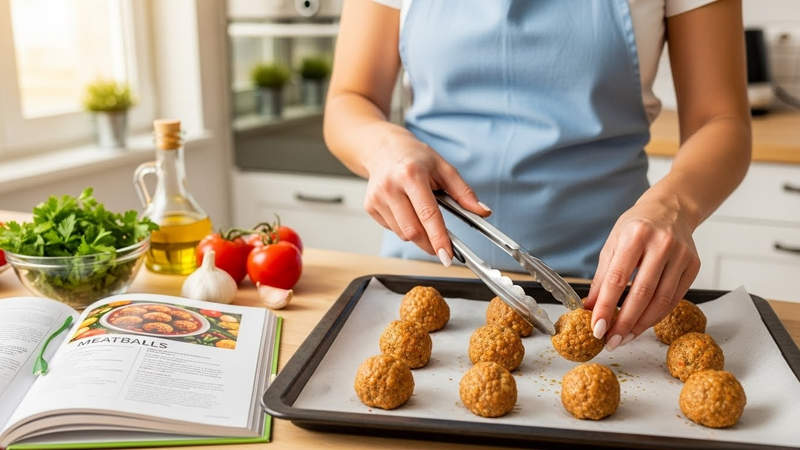
Why settle for less when a simple shift in technique can transform your meatballs into succulent, flavor-packed spheres with a fraction of the effort and fat? Oven baking ensures each meatball cooks evenly, retaining its precious juices and delivering a depth of flavor that pan-frying simply cannot match.
Crafting the Perfect Meatball Mixture
The foundation of an exceptional meatball lies in its composition. A thoughtfully balanced blend of proteins and binders creates a harmonious texture and robust flavor profile.
Selecting and blending meat for optimal texture
A nuanced blend of ground meats offers the most profound flavor and a tender, yielding texture. For every 500 grams, a combination of 50% lean beef, 30% rich pork, and 20% delicate veal provides an ideal balance. Beef contributes a deep, savory foundation, pork lends essential fat for moisture and flavor, and veal introduces a subtle sweetness and fine texture. This trifecta ensures the meatballs remain moist and flavorful, never dense or dry.
Essential binders and aromatics
Beyond the meat, binders and aromatics are crucial for both structure and taste. For 500 grams of the chosen meat blend, incorporate:
- 1 large egg, acting as a cohesive agent that binds the ingredients without imparting a rubbery texture.
- 1 medium onion, finely minced and sautéed until translucent and golden. This crucial step mellows the onion’s sharp bite, concentrating its sweetness and integrating it seamlessly into the mixture.
- 2 cloves of garlic, finely minced, for a pungent aromatic depth that complements the savory meats.
- 1 wheat bread roll, soaked in milk and then gently squeezed to remove excess liquid. This provides a delicate, moist binder that prevents the meatballs from becoming too dense, contributing significantly to their ultimate juiciness.
- 2 tablespoons of fine breadcrumbs, to absorb any residual moisture and further aid in binding.
- 2 tablespoons of fresh herbs, such as finely chopped parsley and dill, infusing the mixture with vibrant, herbaceous notes.
Flavor Profile Enhancers:
| Ingredient | Quantity (per 500g meat) | Purpose |
|---|---|---|
| Fine sea salt | 1 teaspoon | Essential for seasoning, enhancing all other flavors. |
| Freshly ground pepper | 1/2 teaspoon | Adds a sharp, aromatic warmth. |
| Sweet paprika | 1 teaspoon | Imparts a mild, fruity sweetness and a subtle reddish hue. |
| Dried marjoram | 1/2 teaspoon | Offers a woodsy, slightly floral note that pairs beautifully with meat. |
| Ground nutmeg | 1/4 teaspoon | Delivers a warm, earthy spice that rounds out the flavor profile. |
The milk-soaked bread acts as a natural sponge, releasing moisture slowly during baking, which is key to a succulent interior. The slight acidity from the milk also helps tenderize the meat proteins.
Mastering the Art of Meatball Formation
The way ingredients are combined and shaped profoundly impacts the final texture of the baked meatball. Precision in these steps ensures a consistently tender and appealing product.
Gentle mixing for tender results
Combine all ingredients in a large bowl. Use your hands to gently fold and mix the components, working from the bottom of the bowl upwards. The goal is to evenly distribute everything without overworking the meat. Excessive kneading or vigorous mixing develops the meat proteins too much, leading to a tough, rubbery texture rather than the desired delicate crumb. The mixture should feel cohesive but still pliable, with visible specks of herbs and onion.
Achieving uniform shape and size
To ensure even cooking and an appealing presentation, form the meatballs into consistent sizes. Lightly moisten your hands with water to prevent the meat mixture from sticking. Scoop portions of the mixture, aiming for approximately 4-5 cm in diameter. An ice cream scoop is an excellent tool for achieving perfectly uniform portions, ensuring each meatball bakes at the same rate. Before committing the entire batch to the oven, form a single test meatball, bake it, and taste. This allows for any necessary seasoning adjustments to the remaining mixture, guaranteeing a perfectly balanced flavor.
Precision Baking for Irresistible Meatballs
Baking meatballs in the oven is a superior method for achieving a golden exterior and a juicy interior, significantly reducing fat content compared to pan-frying.
Temperature control and browning dynamics
Preheat your oven to 180-200°C (350-400°F) with the convection fan engaged. Convection circulates hot air, promoting even cooking and a more consistent browning across the surface of each meatball. Arrange the formed meatballs on a baking sheet lined with parchment paper, ensuring a minimum of 2 cm (approximately 1 inch) of space between each one. This spacing allows hot air to circulate freely around each meatball, facilitating even cooking and browning. For an intensified golden crust and enhanced flavor, lightly drizzle the meatballs with olive oil or brush them with a beaten egg before they enter the oven. The oil aids in the Maillard reaction, a complex chemical process that creates rich, savory flavors and a desirable browned surface.
Ensuring succulent juiciness
The key to preventing dry meatballs lies in precise timing and strategic moisture retention. Baking times vary based on size:
- Small meatballs (3-4 cm / 1.2-1.6 inches): 15-18 minutes
- Medium meatballs (4-5 cm / 1.6-2 inches): 20-25 minutes
- Large meatballs (over 5 cm / 2 inches): 25-30 minutes
Midway through the baking process, gently turn the meatballs to ensure all sides achieve a beautiful, even golden-brown hue. This promotes uniform browning and prevents one side from becoming overly dark while another remains pale. It is crucial not to exceed the recommended baking times. Overcooking is the primary culprit behind dry, tough meatballs. The most accurate way to confirm doneness is by using an instant-read thermometer; the internal temperature should register 71°C (160°F). At this point, the meatballs will be cooked through, yet still tender and bursting with moisture.
Flavor Enhancements and Serving Suggestions
To elevate the succulence of your meatballs further, consider incorporating grated vegetables like carrots or zucchini directly into the meat mixture. Their natural moisture content releases slowly during baking, keeping the meatballs exceptionally tender. Adding 2 tablespoons of ricotta cheese to the mixture also introduces a creamy richness and helps maintain a moist, delicate crumb.
Once baked to perfection, these meatballs serve as a versatile culinary canvas. Their robust flavor pairs exquisitely with a vibrant tomato sauce, a rich mushroom gravy, or a velvety cream sauce. For a complete meal, present them alongside roasted root vegetables, their earthy sweetness complementing the savory meat, or with a cloud-like mound of mashed potatoes, perhaps infused with a hint of horseradish for a subtle kick. Garnish the finished dish with a sprinkle of fresh herbs and a delicate drizzle of truffle oil to introduce an aromatic, gourmet flourish.