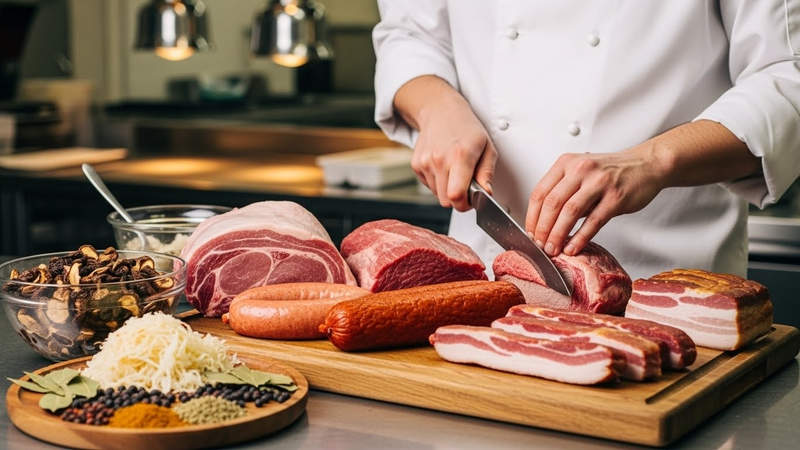
What transforms a simple cabbage stew into Bigos, the legendary Polish hunter’s stew, renowned for its profound, evolving flavors? The answer lies in the meticulous selection and preparation of its meat components, each contributing a distinct layer to an aromatic symphony.
The Foundational Meats: Building Bigos’ Flavor Core
At the heart of any truly exceptional Bigos lies a robust foundation of carefully chosen meats. These primary components provide the bulk, texture, and initial flavor notes that define the dish.
Pork: The Traditional Backbone
Pork forms the traditional bedrock of a well-crafted Bigos. Cuts like the neck or shoulder, rich with intramuscular fat and connective tissue, are paramount. As these pieces slowly braise, the fat renders, basting the meat from within, while collagen breaks down into gelatin. This transformation yields a succulent richness and a velvety texture that enrobes each strand of sauerkraut, ensuring the stew remains moist and deeply flavored through extended cooking. The pork’s inherent sweetness also beautifully balances the sauerkraut’s tangy acidity.
Beef: Introducing Depth and Intensity
Incorporating beef elevates Bigos with an entirely different dimension of flavor. Cuts such as beef roast or shank, when subjected to prolonged, gentle simmering alongside the cabbage, impart a characteristic depth and intense umami. The robust muscle fibers of beef require a more extended cooking period, yet this patience is rewarded with a profound, savory taste and a tender, yielding texture that harmonizes impeccably with the other ingredients, creating a more complex and satisfying mouthfeel.
Elevating Bigos: Specialty Meats and Aromatic Enhancers
Beyond the foundational meats, specific additions can transform Bigos from a hearty meal into a culinary masterpiece, drawing from centuries of noble culinary traditions.
Game Meat: A Whisper of the Wild
Game meat transports Bigos to a higher culinary echelon. Historically, wild boar, venison, or deer were integral to noble Bigos recipes, infusing the stew with a unique, subtly wild aroma and an earthy depth. While less common in everyday preparations today, even a modest inclusion of game meat significantly enriches the dish’s flavor profile, offering a distinct, almost primal note that complements the other ingredients without overpowering them. The leaner nature of game also provides a textural counterpoint to the richer pork and beef.
Cured Meats: The Smoky Embrace
No traditional Bigos reaches its full potential without the nuanced contributions of sausages and cured meats. Smoked hunter’s sausage, kabanos, or smoked bacon introduce a pervasive smoky aroma and an additional layer of savory complexity. The smoking process itself creates a myriad of flavor compounds through the Maillard reaction, which then slowly infuse into the stew during cooking. These cured elements should function as flavor accents rather than the primary meat component. A balanced ratio typically involves approximately 60% primary meats (pork, beef) to 40% flavor-enhancing additions (game, cured meats), ensuring a harmonious blend where no single taste dominates.
Mastering Meat Selection and Preparation for Bigos: A Culinary Blueprint
Achieving Bigos that resonates with authentic flavor and texture demands precision in both selecting and treating its meat components.
Meat Quality: The Foundation of Exceptional Bigos
The selection of appropriate meat forms the bedrock of an outstanding Bigos. Freshness of the raw material is unequivocally paramount; meat should exhibit a uniform color, a resilient consistency, and a clean, natural aroma. Prioritizing cuts with visible marbling is crucial, as these fat deposits will slowly render during the long cooking process, enriching the stew with flavor and contributing to a tender final texture. Sourcing from local farms or trusted suppliers often yields superior results, as their meats tend to possess a more intense flavor and a more desirable structure in the cooked dish.
Key characteristics to observe when selecting Bigos meats:
- Pork: Opt for neck or shoulder cuts, distinguished by clear streaks of fat, which ensure juiciness and flavor.
- Beef: Brisket or roast beef are recommended; their connective tissues break down beautifully during extended cooking, maintaining succulence.
- Game Meat: Wild boar, venison, or deer impart a distinctive, forest-like aroma, adding an unparalleled layer of complexity.
The culinary secret often shared among seasoned chefs: Combining different meat types in a 2:1:1 ratio (pork, beef, game) yields the most intricate and satisfying flavor profile for Bigos.
Pre-Treatment and Cooking Duration: The Art of Harmonious Blending
Before integrating into the Bigos, meat requires precise preliminary treatment. Browning the meat pieces to a shimmering golden hue is a critical initial step. This process, driven by the Maillard reaction, seals the natural juices within the meat and develops a complex array of aromatic compounds that form the flavor backbone of the stew. To maintain the high temperature necessary for proper browning and to achieve that coveted crust, execute this step in small batches, preventing the pan from cooling excessively.
The varying muscle structures and fat content of different meats necessitate distinct cooking durations:
- Pork: Requires approximately 1.5 to 2 hours of gentle simmering to become tender and fully integrated.
- Beef: Needs a minimum of 2 to 3 hours to break down its fibers, ensuring it becomes soft and succulent.
- Game Meat: Demands the longest cooking time, typically 3 to 4 hours, and often benefits from prior marination to tenderize and infuse flavor.
Beyond the traditional, alternative meats can introduce exciting nuances. Turkey meat, particularly from the thighs, offers a lighter profile while retaining succulence. Goose introduces a pronounced, noble flavor, lending a rich, almost luxurious character. For those exploring modern interpretations, duck or lamb can also provide intriguing new dimensions to the classic Bigos.
The proper storage of Bigos with meat is crucial for its maturation and flavor development. Store the stew in airtight ceramic or glass containers. Bigos famously improves in flavor with each reheating, as the meat continues to tenderize and absorb the complex aromas of the sauerkraut and spices. Optimal maturation occurs over 2 to 3 days when stored at 2-4°C, with daily reheating to a gentle boil for approximately 15 minutes. This repeated heating and cooling cycle allows enzymes to continue breaking down components, further integrating flavors and deepening the stew’s character.