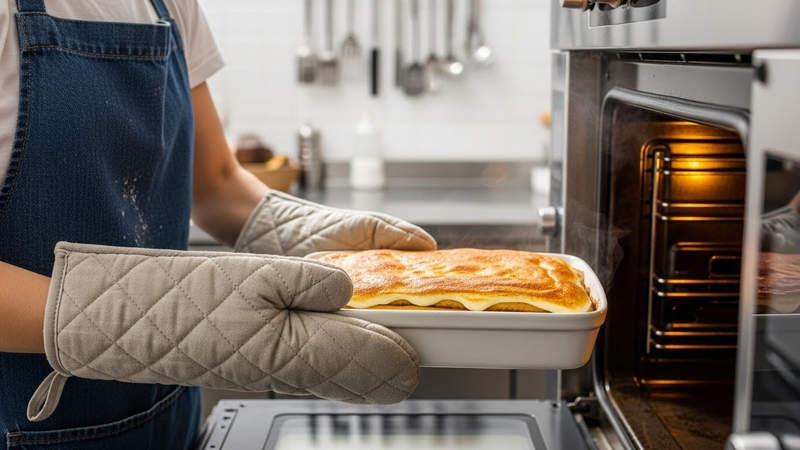
Ever wondered why some desserts achieve an unparalleled creaminess, even after a journey through a hot oven? The secret often lies in a northern Italian treasure, mascarpone, a dairy marvel that defies conventional melting, transforming into a luxurious, stable component in baked goods.
The unique thermal behavior of mascarpone
Mascarpone, originating from Italy’s Lombardy region, exhibits remarkable properties when exposed to heat. Unlike many other cheeses that surrender entirely to warmth, mascarpone maintains its creamy integrity, subtly firming rather than dissolving. This distinctive characteristic stems from its exceptionally high fat content, typically ranging from 60% to 75%. This rich fat matrix stabilizes the cheese within the oven’s embrace, preventing it from liquefying completely.
Fat content and structural integrity
During baking, mascarpone undergoes a fascinating metamorphosis. Its outer layer gently sets, forming a delicate, almost imperceptible casing, while the core remains sumptuously creamy and velvety. This unique structural retention makes mascarpone an invaluable ingredient in baked creations where a rich, unctuous consistency is paramount, even after enduring high temperatures. The fat molecules, rather than breaking down and separating, coalesce and tighten, creating a stable, luscious emulsion that holds its form.
Temperature thresholds for optimal performance
For mascarpone to perform at its peak, maintaining specific temperature parameters is crucial. It best preserves its desirable qualities when baked at temperatures up to 180°C. Exceeding this threshold can disrupt the delicate fat emulsion, leading to an undesirable separation of fats and a grainy, less appealing texture. The goal is a gentle thermal transformation, not a forceful breakdown.
Elevating texture and flavor in baked creations
Mascarpone imbues baked goods with an unrivaled velvety texture and succulent moisture, a boon particularly for cakes and pastries prone to drying out. Its high fat content acts as a natural tenderizer and humectant.
Moisture retention and crumb development
The abundant fat within mascarpone contributes significantly to the softness and fluffiness of baked items. It lubricates the gluten strands, resulting in a tender crumb that feels plush on the palate. This same characteristic also extends the freshness of finished baked goods, often by one to two days, by retaining moisture more effectively than leaner dairy alternatives.
Flavor profile and balancing sweetness
Beyond texture, mascarpone imparts a refined, subtly buttery taste that elevates the overall flavor profile without overpowering other ingredients. Its mild, sweet creaminess adeptly balances the intensity of sugars in desserts, adding a sophisticated depth that prevents them from tasting one-dimensionally sweet.
Mascarpone versus other dairy enrichments
When juxtaposed with other common baking cheeses, mascarpone distinguishes itself through its subtlety. Ricotta, while also creamy, possesses a significantly lower fat content (around 13%) and a higher protein ratio, yielding lighter, yet less velvety, baked results. Cream cheese, often considered a substitute, introduces a more pronounced, slightly tangy flavor and a less silken texture, diverging from mascarpone’s delicate richness.
Mastering mascarpone in baking: preparation insights
Achieving the best results with mascarpone in baking hinges on mindful preparation.
Optimal temperature and mixing techniques
To ensure optimal structural integrity and seamless integration into batters, chilling mascarpone before incorporating it into a recipe is a professional nuance. A colder temperature helps the fat maintain its firmness, allowing it to blend more smoothly with other ingredients without losing its unique properties. Conversely, before adding mascarpone to a mix, allowing it to reach room temperature for approximately 15-20 minutes ensures it softens just enough to unify its consistency without becoming too fluid. When blending, gentle mixing is paramount. Over-agitating mascarpone can cause the delicate fat emulsion to break, leading to separation and an undesirable oily texture in the final product. The aim is to achieve a homogenous mixture, not to aerate or whip aggressively.
Culinary applications: sweet and savory baking
Mascarpone’s creamy texture and delicate flavor make it an exceptional component in both sweet and savory baked creations. Its ability to retain structure and impart moisture makes it indispensable in modern culinary practices.
Classic and contemporary sweet preparations
Cheesecakes with a mascarpone heart
Mascarpone cheesecakes stand apart with their exceptional creaminess and lighter mouthfeel compared to traditional versions. A key to achieving an ideal texture involves combining mascarpone with cream cheese in a 1:2 ratio. For delicate results, a no-bake method allows the mascarpone’s inherent softness to shine. Alternatively, baking at 150°C for 90 minutes yields a stable structure devoid of cracks. Incorporating white chocolate further amplifies the mass’s creamy richness. To prevent the cheesecake from sinking post-baking, a gradual cooling process is essential: the first 30 minutes within a slightly ajar oven, followed by cooling at room temperature.
Enriched muffins and cupcakes
Muffins and cupcakes benefit significantly from mascarpone’s inclusion, gaining moisture and extended freshness. Adding 100 grams of mascarpone per 250 grams of flour transforms the batter into a silky-smooth consistency. Harmonious flavor compositions emerge when paired with seasonal fruits such as blueberries, raspberries, or pears. Cupcakes featuring mascarpone cream and caramelized figs have become particularly sought-after, where the figs’ sweetness perfectly balances the cheese’s subtle acidity.
Tiramisu reimagined with baked textures
A contemporary interpretation of the classic tiramisu incorporates baked elements. A coffee-infused sponge cake, baked at 180°C for 25 minutes, forms the foundational layer. This is then crowned with a luscious cream crafted from mascarpone, egg yolks, and sugar. The addition of baked almonds introduces a delightful crunch, creating a compelling textural contrast against the creamy dessert.
Savory baking innovations
Tarts and quiches with a velvety finish
Tarts and quiches gain an enhanced creaminess and profound depth of flavor with mascarpone. Incorporating three to four tablespoons of the cheese into a standard egg-and-cream filling yields an exquisitely velvety texture. Particularly successful pairings include:
- Spinach, mascarpone, and pine nut tart
- Caramelized onion, mascarpone, and thyme quiche
- Savory tart with pears, mascarpone, and blue cheese
Artisan breads and focaccia
Focaccia, the traditional Italian flatbread, receives an innovative upgrade with mascarpone. Introducing 100 grams of mascarpone into the dough before its second proofing bestows an unparalleled softness and moisture. While mascarpone-enriched dough necessitates a slightly longer proofing time, approximately 90 minutes, the ultimate reward is a bread with a silky crumb and a subtly rich flavor. Yeast breads, such as challah and brioche, also benefit from mascarpone, which extends their freshness by up to three days compared to traditional recipes. It amplifies their inherent buttery character without demanding an excessive amount of additional fat.